Charlie Shaw’s Revenge Interview: John Langridge and Renato Pires
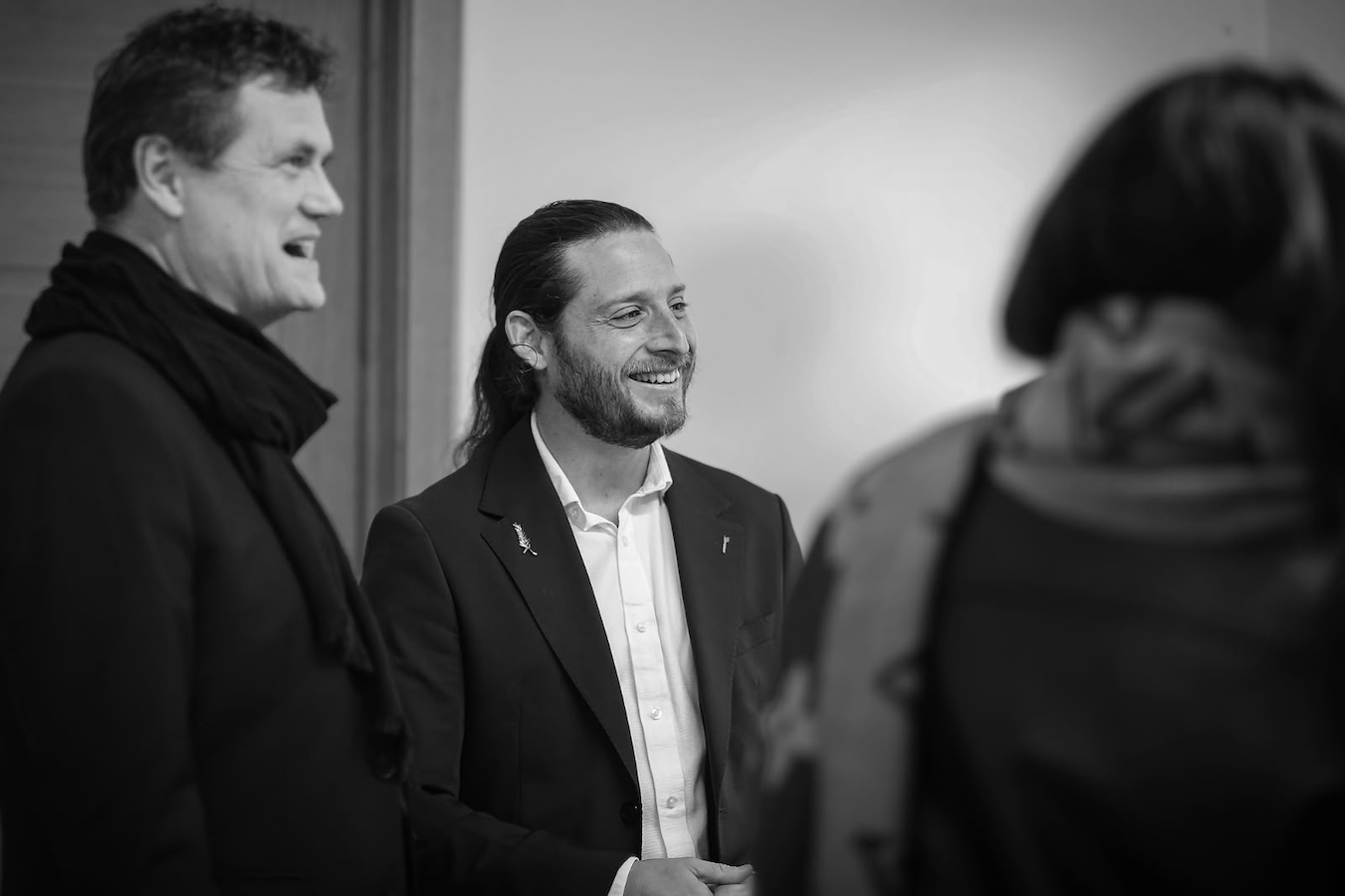
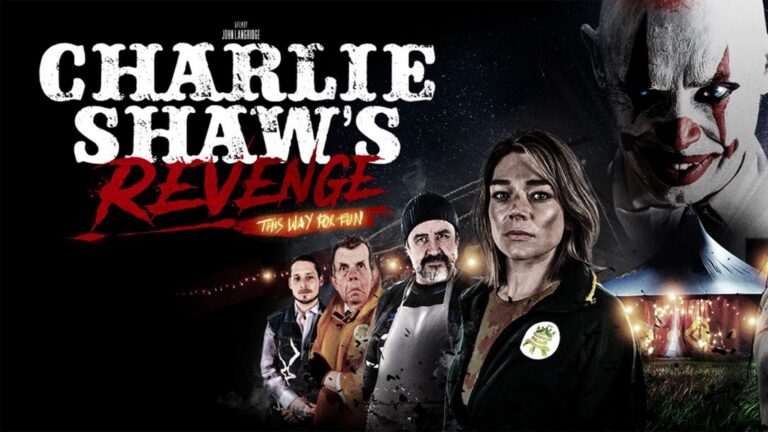
In our Charlie Shaw’s Revenge interview, writer/director John Langridge and producer Renato Pires discuss how an early killer-clown concept evolved into a feature film, the challenges of filming inside a working adventure park, and how the movie inspired a real-life Halloween attraction at Knockhatch Adventure Park in East Sussex.
William spoke with writer-director John Langridge and producer Renato Pires about building a distinct clown character, casting Cerys Knighton and James Payton, the practical headaches of filming at an active park, and how the movie inspired a Halloween immersive experience at the same location. The conversation also covers the possibility of more Charlie Shaw and the filmmakers’ next project, Hostage. Read our spoiler-light Charlie Shaw’s Revenge review for the film itself, or our report on the Knockhatch immersive experience for the visitor attraction.
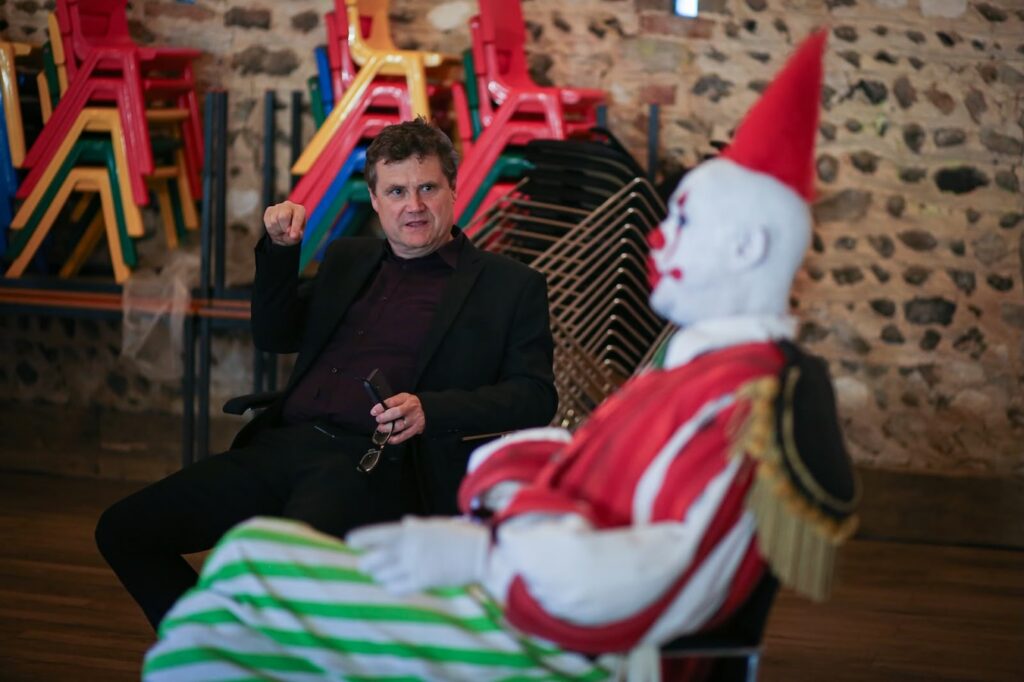
Charlie Shaw’S Revenge interview: From Circus Concept to Feature Film
Pires explains that the project began with a short concept called Carnival, rather than an existing script that he was invited to produce. Langridge and the team developed that idea into Charlie Shaw’s Revenge, keeping the clown and circus setting central while drawing on Pires’s knowledge of circus performers and their working lives. The filmmakers also discuss their deliberate effort to make Charlie different from better-known screen clowns.
Filming at Knockhatch and Building a Live Horror Experience
Filming at Knockhatch created some unusual restrictions: the park was still open to guests, so sets and equipment needed to be cleared away after each shoot. The filmmakers recount a mishap involving a disconnected plug and a freezer full of melted ice cream, then explain how Pires proposed bringing Charlie Shaw back to the park as a Halloween attraction.
Watch the Charlie Shaw’s Revenge Interview
Watch the full video interview on YouTube. The complete conversation is transcribed below but lightly edited while preserving the speakers’ meaning and personalities.
Full Charlie Shaw’s Revenge INterview Q&A
Charlie Shaw’s Revenge starts with a familiar killer-clown setup, but there’s a darker emotional story underneath it. Was that emotional side always the foundation, or did it develop as you wrote it?
John Langridge: It was. We wanted to start with that Friday the 13th trope of people getting ready to open something, but we knew we wanted to do something darker.
William: Renato, what drew you to this particular script and made you want to help bring it to the screen?
Renato Pires: Actually, we worked the other way around. I came to John with a project I wanted to do and asked if he wanted to direct it and work together. I didn’t have a script, because scripts aren’t my thing. John is the writer.
John: You had that short, didn’t you? You should tell him about Carnival.
Renato: Eight or ten years ago, I made a short concept film in my loft about a killer clown called Carnival. I wanted a clown who chops people up, cooks them and eats them. That was my initial idea. Then John and Justin came up with an idea to tweak it and make it Charlie Shaw’s Revenge. We put the Carnival concept to one side and moved toward the Charlie Shaw story, but I wanted the clown and the circus to remain. Those were my main points.
John: I went to see the locations, and then I started writing a script around what we had. Renato runs the East Sussex School of Circus Arts, so that’s where a lot of the circus material comes from. The good thing was that we could ground the story in how a circus actually works, the mechanisms of it and the idea of the circus family. Renato and I had a lot of conversations about how people in that world would do things and how everything would work.
Renato: The circus community is huge, and I thought it would be nice to have a film dedicated to that world. I haven’t seen many films mainly focused on circus people. I wanted that niche concept, and I knew there was an audience for it. The circus was important. I also wanted to keep our clown as far away as possible from Pennywise or Terrifier, so we could have our own idea. John worked with the team on the characters, acting and storyline, while I made sure the circus history and details were there for people to develop. Everyone brought some of their own personality to the project.
John: It really was a team effort. You need a good, tight team in filmmaking. The costume design and the makeup drew on Renato’s knowledge of circus clowns. Kate Griffiths worked on the clown makeup and the practical kills. We started calling her the Angel of Death because she was so good at it.
William: There’s a lot more history there than I realized. It’s really cool that you could bring that into the movie and shine a light on the circus.
John: It’s the authenticity that helps. It gives you something solid to play with. It doesn’t have to come through in every scene, but it gives the film good grounding.
Cerys Knighton really stood out to me as Marion. There’s more to her character than you might initially expect, and I thought she handled it really well. How much of Marion’s character was established in the script, and what did Cerys bring to the performance?
John: I found her fascinating to watch. I wanted her journey to be one where she comes in and everybody hates her. She’s officious, she’s shouting at people who’ve worked there forever, and then they ostracize her. That was important: make her unpopular with the staff but sympathetic to us. When she starts seeing the killer clown and tells everybody there’s a problem, no one wants to listen to her. Bringing in a stranger who is also the boss made that work. People can assume she’s upset somebody and that’s why they’ve left, rather than realizing they’ve been killed. It was deliberate.
James Payton gives Charlie Shaw a vulnerability alongside that creepiness. What were you looking for when you cast the role?
John: I’m glad you picked up on that, William, because I had a conversation with James about it. He’s been in Wednesday, Captain America and Harry Potter, among many other things. He’s a working character actor in the UK. We wanted Charlie to be sympathetic, because it’s a revenge story. He’s been wronged, and in his mind the people he’s after deserve it. James and I talked about making him a happy, jolly clown who also happens to be chopping people up. James was at a Comic Con in Sweden, I think, and sent us an audition tape he’d recorded in his hotel room. He looked completely insane. I don’t know what the people in the next room must have thought, but we watched it and thought, ‘Let’s give him the part.’
William: You mentioned Terrifier and It, and Charlie really is different from those clowns. You wanted to take him away from those characters, and you did.
John: We had to look at those characters and decide that Charlie needed to go somewhere else, both in design and personality. Renato had a hand in that. Charlie Shaw has to have his own personality.
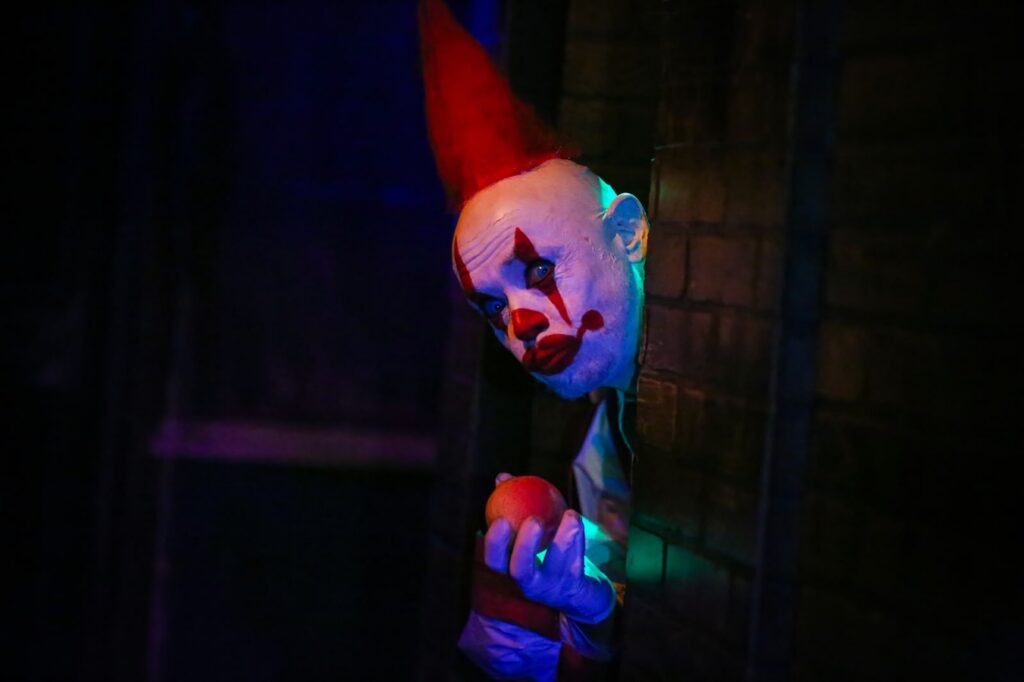
how did Knockhatch Adventure Park and the East Sussex School of Circus Arts become filming locations, and what did working at a real-life adventure park give you?
Renato: Those locations hadn’t been used by us as film sets before, so this was the first time. It was challenging. The park is huge, around 65 acres, and from a filmmaking perspective you have to set up your crew, cameras and equipment. You can’t leave things ready for the next day the way you would in a studio. Every day it was arrive, set up, dismantle and pack. Then do it again the next day, for the whole production. It was very ambitious. We also had live animals, children on set and the weather to deal with. You can’t predict what animals will do, and when you’re outside you’re at the mercy of the weather. Since then, people have asked whether they can film there or whether I can be a co-producer. I tell them I’ll have to think about it. I’m still recovering.
Did you have to do a lot of planning beforehand to make that constant setup and breakdown work?
John: As Renato was saying, the park is operating. It only closes for Christmas Day, Boxing Day and New Year’s Day. They finish their day, the cleaners come through to pick up the popcorn and everything else, and then we come in. We’d have perhaps an hour and a half of daylight to shoot daytime scenes, then carry on after dark. At the end of the shoot, we had to remove everything and leave the place exactly as the cleaners had left it. The agreement was that when the park staff arrived, it shouldn’t look as if we’d been there. No coffee cups, severed heads, axes or lights left lying around. Nothing.
Renato: There’s actually a funny story about that. One night, because it was raining, we went indoors to film in the Dino Maze, the dinosaur area. For sound, we had to turn things off because they were making noise. The team switched off one plug. The next day I arrived, and all the ice creams were melted.
John: We missed that one. They weren’t very happy about it. That’s what comes with working in a day-to-day park. If we’d been working in a closed facility or indoor studio, we wouldn’t have had to think about switching everything off and then switching it all back on.
William: Did you end up adding a bunch of ice creams to the budget after that?
Renato: Yes, the budget starts down here and shoots up!
John: That meant Renato taking the owners out to dinner. I remember telling the operations manager that we’d finished, and he looked at me and said, ‘You’ll be back.’ Sure enough, we came back for pickups. We were deeply indebted to the owners and the whole Knockhatch team. They trusted us with their livelihood, and apart from a couple of hiccups, I’d like to think we treated the location with respect. They saw the finished film and loved it.
Renato: For me, it was important to use something that hadn’t been done before. We knew the theme park and the circus school gave us something unique, and we only showed a fraction of the park. There could be more to show, whatever comes next.
Now there’s a Charlie Shaw’s Revenge immersive experience at Knockhatch. Was a live attraction part of the vision during production, or did that come afterward?
Renato: Initially, it was simply, ‘Let’s make a film.’ The team wanted a theatrical release, and that was important to us from the beginning. As we developed the project, other possibilities came up, including a novelization. We launched a book, which became another part of the Charlie Shaw property. A few months ago, I came to John and said I was going to speak with the park about doing a maze for Halloween, an immersive Charlie Shaw’s Revenge experience. I spoke with the park and its marketing team, and we decided to see how it went. We had a press launch on October 13, with real police cars there, and James Payton came as well. The experience runs until October 31. We managed to get our first immersive experience going for eight days in a row, and now I’d like to take the idea to other theme parks: would they want to bring Charlie Shaw’s Revenge to their own park? Licensing that experience is something I’d like to pursue next. What I would love, is on Halloween people say, “What do you want to dress up as?” and they say “I’m going to dress up as Charlie Shaw”.
John: I’d love to get to Halloween and see people dressed as Charlie Shaw. Walking down the street and seeing Charlie Shaw coming toward me would be the biggest honor.
Are there plans to make the attraction a yearly event at its current location?
Renato: The park and the school have been happy to leave the doors open for the idea, but it all comes down to the audience. People need to give Charlie Shaw a chance. There are always things you could improve, but sometimes you’ve done the best you can with the resources you have. A second movie might have more budget, infrastructure and bigger names. We’d need the audience to want to see it, because if they don’t, why would we make another?
John: We’ve been taking the film around to theatrical screenings, doing a roadshow with Q&As and merchandise. We ask audiences what they’d like to see more of, and they say, ‘More clown. More kills.’ That’s what horror fans want.
Charlie Shaw’s Revenge is available to rent or buy on Amazon Prime Video. Apart from Charlie Shaw, are either of you working on anything else you’d like people to know about?
John: Hostage is the next film we’re doing. It’s a road movie about a man who owes money to a local crime lord. His girlfriend is being held hostage, and he and his friend attempt to rob a petrol station. It goes horribly wrong: one of them is killed and the other is injured. He runs into a woman who has stopped for petrol and takes her hostage because he’s hurt and can’t drive. He’s picked the worst possible person to kidnap, and he’s stepped into a much bigger world. It’s a road-movie thriller and horror story where nothing is what it seems, nobody is who they seem, and there are plenty of twists, turns and horrific murders. The usual kind of stuff.
William: That sounds right up my alley.
Renato: I have a question for you, William. What would you like to see more of?
William: Maybe more clown-themed kills.
John: We were thinking about really good clown-themed kills ourselves. We had a Q&A in Sheffield with Renato and James, who plays Charlie Shaw. We went to the hotel bar for one drink and ended up having three or four, staying up until about quarter to three in the morning talking about what we’d like to see in a sequel. We were coming up with horrific kills and writing them all down. Get like-minded horror fans talking about kills and horror, and you could be there until five in the morning.
William: Get horror fans talking about kills and horror, and you could be there until five in the morning. I appreciate you both taking the time today. Congratulations on the film, and I’m looking forward to Hostage and maybe a Charlie Shaw 2.
John and Renato: Thanks for having us, William.
For more on the film, read our Charlie Shaw’s Revenge review, and visit our immersive-experience feature for the Knockhatch connection. The film’s official website has additional information.