
BACKROOMS (2026)
Official Synopsis
After a therapist’s patient disappears into a dimension beyond reality, she must venture into the unknown to save him.
William’s Review
I purposely went into Backrooms knowing almost nothing. I avoided Kane Parsons’ YouTube series because I wanted to judge the film entirely on its own merits, and I’m incredibly glad I did. Few horror movies genuinely surprise me anymore, but Backrooms managed to do exactly that. It isn’t just another monster movie or haunted-house story. It’s a completely unique horror experience that feels unlike anything else currently playing in theaters.
What impressed me immediately was Parsons’ confidence as a filmmaker. It’s hard to believe this is the work of a 21-year-old director. The visual language, pacing, and control of atmosphere demonstrate a level of filmmaking maturity that many established directors never achieve. Every frame feels intentional, and the movie constantly finds new ways to make familiar spaces feel deeply unnatural.
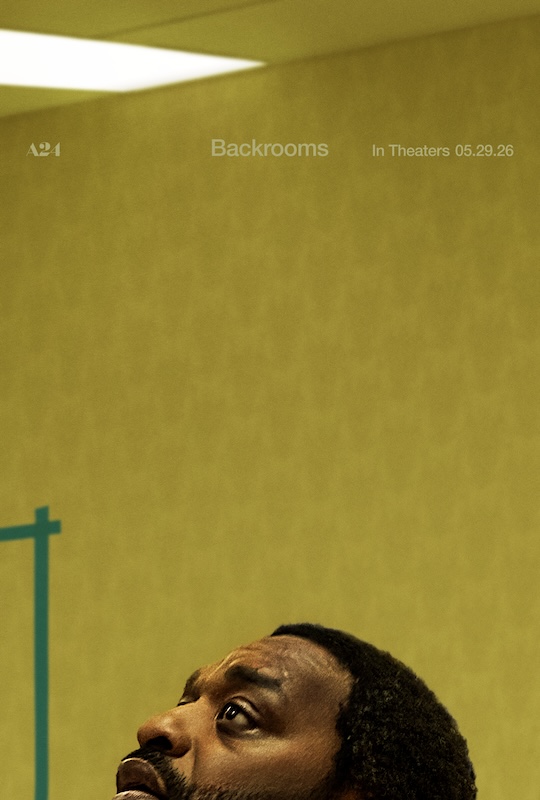
The production design deserves enormous praise. The Backrooms themselves become the movie’s greatest villain. Endless yellow hallways, impossible architecture, tiny doors leading to vast spaces, strange furniture, distorted memories of ordinary rooms—everything feels recognizable while simultaneously feeling wrong. That subtle distortion creates constant unease because your brain recognizes these places without ever fully understanding them.
The sound design may be even more impressive. Much of the horror comes from hearing something rather than seeing it. Footsteps echo through endless hallways. Strange noises bounce through spaces where you can’t tell how close danger really is. Parsons understands that allowing the audience’s imagination to fill in the blanks is often far more effective than simply showing the monster.
I also appreciated how much emotional depth exists beneath the horror. The Backrooms aren’t simply random scary hallways. They become a reflection of loneliness, regret, isolation, and broken memories. Even without diving too deeply into the mythology, the movie gives the world enough internal logic that it feels mysterious rather than confusing. After watching interviews with Parsons, I love knowing he has extensive lore behind the concept but wisely chose not to overwhelm newcomers with exposition.
The performances are another pleasant surprise. The emotional connection between the two leads gives the audience someone to root for inside this impossible world, preventing the movie from becoming nothing more than an atmosphere piece. Without that humanity, the Backrooms themselves wouldn’t have nearly the same emotional impact.
This certainly isn’t horror for everyone. It’s slow, deeply atmospheric, and intentionally unsettling rather than action-packed. But if you enjoy horror that trusts its audience and creates fear through mood instead of nonstop gore, Backrooms is one of the most memorable horror experiences I’ve had in quite some time. It’s a confident, original debut and an easy Full Price recommendation.
What impressed me immediately was Parsons’ confidence as a filmmaker. It’s hard to believe this is the work of a 21-year-old director. The visual language, pacing, and control of atmosphere demonstrate a level of filmmaking maturity that many established directors never achieve. Every frame feels intentional, and the movie constantly finds new ways to make familiar spaces feel deeply unnatural.
The production design deserves enormous praise. The Backrooms themselves become the movie’s greatest villain. Endless yellow hallways, impossible architecture, tiny doors leading to vast spaces, strange furniture, distorted memories of ordinary rooms—everything feels recognizable while simultaneously feeling wrong. That subtle distortion creates constant unease because your brain recognizes these places without ever fully understanding them.
The sound design may be even more impressive. Much of the horror comes from hearing something rather than seeing it. Footsteps echo through endless hallways. Strange noises bounce through spaces where you can’t tell how close danger really is. Parsons understands that allowing the audience’s imagination to fill in the blanks is often far more effective than simply showing the monster.
I also appreciated how much emotional depth exists beneath the horror. The Backrooms aren’t simply random scary hallways. They become a reflection of loneliness, regret, isolation, and broken memories. Even without diving too deeply into the mythology, the movie gives the world enough internal logic that it feels mysterious rather than confusing. After watching interviews with Parsons, I love knowing he has extensive lore behind the concept but wisely chose not to overwhelm newcomers with exposition.
The performances are another pleasant surprise. The emotional connection between the two leads gives the audience someone to root for inside this impossible world, preventing the movie from becoming nothing more than an atmosphere piece. Without that humanity, the Backrooms themselves wouldn’t have nearly the same emotional impact.
This certainly isn’t horror for everyone. It’s slow, deeply atmospheric, and intentionally unsettling rather than action-packed. But if you enjoy horror that trusts its audience and creates fear through mood instead of nonstop gore, Backrooms is one of the most memorable horror experiences I’ve had in quite some time. It’s a confident, original debut and an easy Full Price recommendation.
Amy’s Review
I don’t think I’ve ever had a horror movie affect me quite like Backrooms did. I wasn’t just scared while I was watching it—I stayed scared after it was over. Walking into a dark movie theater restroom suddenly felt creepy. Driving home during a thunderstorm somehow made everything worse. Even talking about the movie afterward brought back that same uneasy feeling. That’s how effective this film is.
The biggest reason it worked on me wasn’t actually the monster. It was the sound. Most horror movies try to scare you with what you see. Backrooms scares you with what you hear. Every distant footstep, every strange echo, every noise coming from somewhere you can’t identify had me covering my ears and wondering what was about to happen. My imagination did most of the work, and honestly, that made everything much scarier.
The Backrooms themselves also created a feeling I’ve never experienced in another movie. They’re lonely, empty, depressing spaces that somehow feel familiar while also feeling completely wrong. The endless yellow walls, strange angles, tiny doors, and impossible layouts gave me a constant feeling of dread. Instead of wanting to explore this world, I wanted to escape it as quickly as possible.
The emotional tone also surprised me. I expected a scary movie. I didn’t expect one that would leave me feeling genuinely sad. Both main characters carry so much loneliness that the sadness almost becomes part of the environment itself. Even before the horror escalates, there’s this emotional heaviness hanging over everything that I couldn’t shake. That’s ultimately why my rating is lower than William’s.
That isn’t because I think the movie is poorly made. Quite the opposite. The acting is excellent, Kane Parsons deserves incredible credit for what he accomplished at such a young age, and I completely understand why horror fans are going to love this movie. It genuinely scared me multiple times, which is becoming increasingly difficult for horror movies to do.
My hesitation comes from how emotionally draining the experience became. I don’t usually enjoy leaving a theater feeling depressed, anxious, and unsettled for hours afterward. Backrooms absolutely accomplished what it wanted to accomplish—it just wasn’t an emotional experience I personally wanted to repeat.
If you’re a horror fan looking for something completely different, I absolutely think you should watch it. Just know that this isn’t the kind of scary movie you simply shake off when it’s over. For me, that’s enough to recommend it as a Renter, even though I have tremendous respect for what the filmmakers achieved.
The biggest reason it worked on me wasn’t actually the monster. It was the sound. Most horror movies try to scare you with what you see. Backrooms scares you with what you hear. Every distant footstep, every strange echo, every noise coming from somewhere you can’t identify had me covering my ears and wondering what was about to happen. My imagination did most of the work, and honestly, that made everything much scarier.
The Backrooms themselves also created a feeling I’ve never experienced in another movie. They’re lonely, empty, depressing spaces that somehow feel familiar while also feeling completely wrong. The endless yellow walls, strange angles, tiny doors, and impossible layouts gave me a constant feeling of dread. Instead of wanting to explore this world, I wanted to escape it as quickly as possible.
The emotional tone also surprised me. I expected a scary movie. I didn’t expect one that would leave me feeling genuinely sad. Both main characters carry so much loneliness that the sadness almost becomes part of the environment itself. Even before the horror escalates, there’s this emotional heaviness hanging over everything that I couldn’t shake. That’s ultimately why my rating is lower than William’s.
That isn’t because I think the movie is poorly made. Quite the opposite. The acting is excellent, Kane Parsons deserves incredible credit for what he accomplished at such a young age, and I completely understand why horror fans are going to love this movie. It genuinely scared me multiple times, which is becoming increasingly difficult for horror movies to do.
My hesitation comes from how emotionally draining the experience became. I don’t usually enjoy leaving a theater feeling depressed, anxious, and unsettled for hours afterward. Backrooms absolutely accomplished what it wanted to accomplish—it just wasn’t an emotional experience I personally wanted to repeat.
If you’re a horror fan looking for something completely different, I absolutely think you should watch it. Just know that this isn’t the kind of scary movie you simply shake off when it’s over. For me, that’s enough to recommend it as a Renter, even though I have tremendous respect for what the filmmakers achieved.