Georgia Bernstein on Night Nurse, Cronenberg and Erotic Thrillers
Georgia Bernstein talks Night Nurse, David Cronenberg, erotic thrillers, Jem Ray, Bruce McKenzie and creating the film’s dreamlike world.


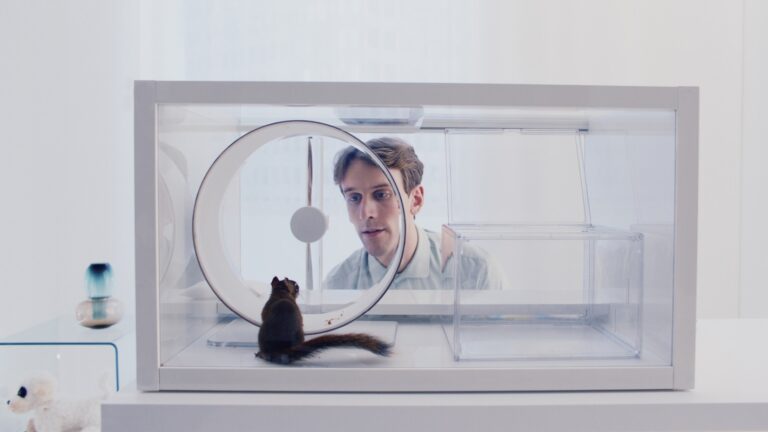
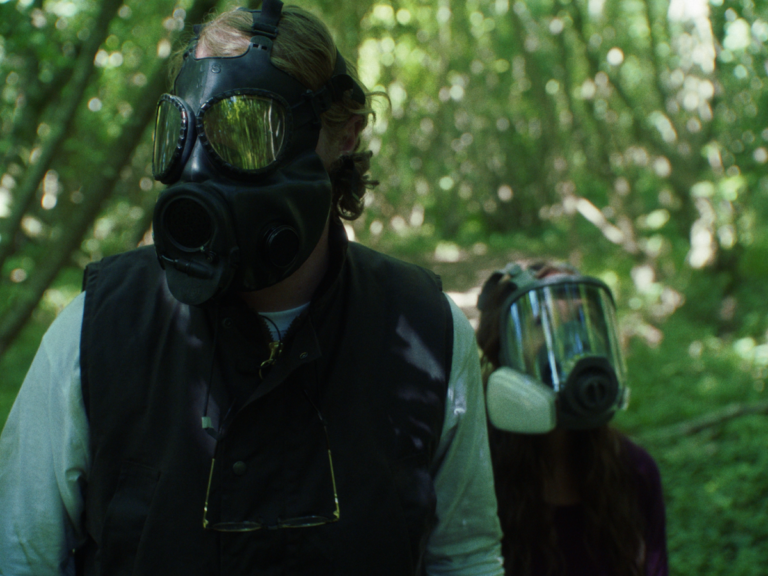
Writer-director Georgia Bernstein joined The Fear Review to talk about her feature debut Night Nurse, a contemporary erotic thriller that arrived at Sundance before being picked up by IFC Films.
Bernstein digs into the film’s deliberately murky power dynamics, why David Cronenberg’s Crash became a major creative reference, and how a real scam call targeting her grandmother helped shape the movie. She also discusses writing the lead role for longtime collaborator Jem Ray, casting Bruce McKenzie as Douglas and creating a world that feels untethered from any specific decade.
You can also read or watch William and Amy’s full Night Nurse review.
Watch Our Georgia Bernstein Interview
If you would rather read it, our full conversation is below, lightly edited for clarity.
The Fear Review Interviews Georgia Bernstein
The Fear Review: Night Nurse is your debut feature. It premiered at Sundance, was picked up by IFC and is now heading to theaters. How are you feeling about everything that’s happened?
Georgia Bernstein: I feel insanely grateful for everything that’s happened. For a little indie like us, getting into Sundance was the first big step. We made exactly the movie that we wanted to make, and I feel really lucky that we were able to do that.
Then to get into Sundance, it was like, “Okay, wow, people are really going to be able to see this film.” And then to be bought by IFC — working with a partner that has such a strong legacy in the industry and has supported so many of my favorite filmmakers — it’s a real dream come true.
The Fear Review: One thing that interested me about Night Nurse is that it doesn’t play as a simple victim-and-villain story. Was that complexity there from the beginning, or did it develop as you wrote?
Georgia Bernstein: It was always there. I’m really interested in complex power dynamics. One of my favorite filmmakers is Catherine Breillat, and she’s often making films about a young woman and an older man. I was interested in doing something like that and playing with power dynamics. With Night Nurse, I was asking how we could push this dynamic to an extreme. She’s a young nurse and he lives in a retirement community and may or may not have dementia.
I’m really interested in those power dynamics and the push and pull of that. That’s where a lot of the murkiness comes from in the film. We’re making a contemporary erotic thriller, and I didn’t want to just play on tropes. I wanted it to feel contemporary. Part of that power dynamic is that I think young women are powerful. I wanted to represent that in the film, where she has a lot of agency and it is complicated.
The Fear Review: You’ve cited David Cronenberg as an influence. What specifically did you bring from his work into Night Nurse?
Georgia Bernstein: My big Cronenberg reference is, of course, Crash. It doesn’t get better than Crash. I love all Cronenberg, but Crash specifically was an exciting reference because it’s an erotic thriller, but it’s a subversive one. He’s eroticizing something that’s not typically eroticized, which is car crashes.
I was interested in doing something similar because I wanted to subvert the genre. I love a classic erotic thriller, but it felt like we needed to do something fresh. My grandmother was almost scammed by one of these grandparent scams. Someone called her pretending to be my brother and said he’d been in a bad accident and needed help. I was struck by these calls and wanted to twist them into an erotic thriller because they were so performative and could be so cinematic. I was trying to think about these scam calls in a Crash, Cronenberg-style way.
I’m also super influenced by his pacing and his lighting. Aesthetically, he’s a huge inspiration for me. My DP and I watched Crash many times, and I also watched it many times in the edit. The pacing is perfect in that film.
The Fear Review: You wrote the lead role for your longtime collaborator Jem Ray. How did that relationship and trust affect the way you wrote the character?
Georgia Bernstein: Definitely. Writing it for Jem Ray, I felt like I could write something complex because I could imagine it and we could work together in rehearsal and with dialogue to make sure it felt really lived in. It was totally influenced by Jem Ray. We have very similar taste, so I knew she was comfortable and interested in this kind of genre and these kinds of themes.
It gave me freedom, but also parameters to work within because I wanted it to feel like a part of her — not that she’s anything like this character in real life. We came up doing acting classes together, and I think we both believe that characters come from within you, from a certain part of yourself. I feel like that’s where a lot of great performances come from. It pulls out something within you that already exists.
The Fear Review: Douglas needs to feel vulnerable, menacing and charismatic at the same time. What was the casting process like for that role?
Georgia Bernstein: I was so lucky to meet Bruce McKenzie through a friend because it was one of the only parts that I didn’t write for a specific person. Almost every other part I wrote for the person who ended up playing it. I didn’t know Bruce when I was writing the script and before we started casting.
I’m a big Cassavetes fan, so I was writing Douglas with that kind of idea. When I met Bruce, it was so exciting because he brought so much of himself and his own ideas to the character. I hadn’t had someone specific in my head, so it was exciting that he filled it out with so much specificity and detail. He’s such an amazing performer. I got very lucky meeting him.
The Fear Review: The score, cinematography and locations give Night Nurse a dreamlike, almost ’70s feeling. Did you have a specific time period in mind?
Georgia Bernstein: I knew I didn’t want it to say what time period we were in. Intentionally, there are no smartphones in the movie, and there’s a mix of clothing and cars. To me, that’s part of what makes it feel like a dream. We’re in a world that we don’t know. It’s not slice of life, and I didn’t want it to feel like a documentary.
I love ’70s cinema. A big reference for the film is 3 Women. It’s also based on how my grandmother’s house really feels. We shot in my real grandma’s house. She moved in there in the ’70s and decorated in the ’70s, but the phones are from the ’90s. You have a last-generation landline and full wallpaper. It’s this mixture of time periods, which reminds me of a retirement community. I like how disorienting that feels. Not feeling oriented in space or time was definitely part of what I wanted the movie to feel like.
It was a very delicate balance. Sometimes we’d be filming the car stuff and a contemporary car would pass in the background and it would break the dream. Setting, props, clothing — everything had to be perfectly synced up to create that feeling.
The Fear Review: Night Nurse is just reaching theaters, but are you already looking ahead to what’s next?
Georgia Bernstein: Definitely trying to sit in the moment, but also, of course, working on the next thing. I’m looking to make more erotic thrillers, so hopefully you can look out for that from me.
Our Night Nurse Review
For more on Bernstein’s debut, read or watch William and Amy’s spoiler-light Night Nurse review.