
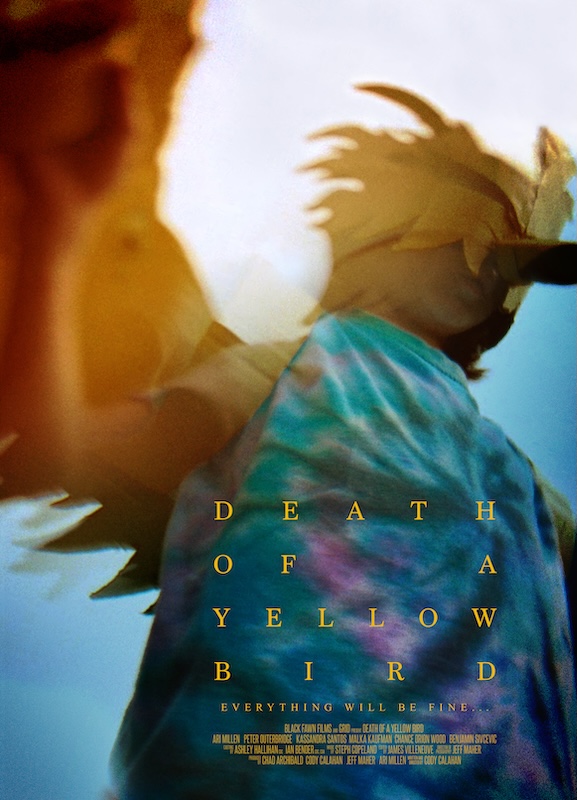
Death of a Yellow Bird (2026)
Synopsis
Our Death of a Yellow Bird review explores a story of grief and dread, where unsettling sounds and a heavier emotional mystery turn an unexpected premise into effective horror.
William's Death of a Yellow Bird Review
Death of a Yellow Bird was not the movie I thought I was getting from the trailer, and I mean that in the best possible way. I expected something much more experimental, but this ended up being more straight-up horror than I expected while also having a much heavier emotional story underneath it.
A lot of the horror comes from the sound, particularly the things coming through the tapes. There were several times where just listening to them was enough to make a scene creepy without the movie needing to throw a loud jump scare at me. I did occasionally have trouble understanding exactly what the voice was saying, but I was always able to get there eventually. I also really liked Steph Copeland's score. It knew when to make the horror more intense without beating me over the head with it, but I also liked the music outside of those moments. It's one of those scores I could actually see myself listening to on its own.
Ari Millen has to carry most of this movie on his shoulders, and he absolutely does. There are stretches where he has to communicate what he's going through without saying much at all, and his emotions always felt right to me. I didn't always agree with his character's decisions. Knowing what he's dealing with, being alone instead of spending that time with my family definitely wouldn't be my choice. But I believed why he was making those choices.
I also kept noticing Jeff Maher's camera work. It never felt like the camera was moving just because somebody decided the shot needed to move. There are moments where it gets ahead of Millen and immediately makes you wonder what he's walking toward. There's another moment where he's filming himself, starts to break down and stops, and the camera pulls away with him in a way that almost feels like he's emotionally retreating from us. Little choices like that added a lot.
After watching the movie, I read Cody Calahan's director's statement and learned how personal this project was for both him and Millen. Calahan writes about losing his mother without getting the chance to say goodbye, and later making this movie with Millen after his friend became seriously ill. He describes the film as something they made to confront those emotions and ultimately says, “This movie is meant to heal." That made the emotion I had already felt watching the movie make even more sense.
There is a connection to Undertone here too, with Calahan having produced that film. I can absolutely see it. Both use sound as a huge part of what makes them creepy, but Death of a Yellow Bird worked much better for me. This feels like what I wanted Undertone to be. The ending is heartbreaking and heavy, but the way it's handled takes just enough of that weight away. Where I felt Undertone struggled to land the plane, this one landed it.
I went in expecting a strange experimental horror movie. I came out surprised by how creepy it was, but even more surprised by how much I cared about the person at the center of it.