No Rest for the Wicked (2026)
Synopsis
Our No Rest for the Wicked review explores an atmospheric tale set on the Faroe Islands, where a haunting landscape and emotional storytelling give the horror its power.
William's No Rest for the Wicked Review
No Rest for the Wicked was a huge surprise for me. I thought the trailer looked interesting enough, but it does not do this movie justice or really show just how good it is.
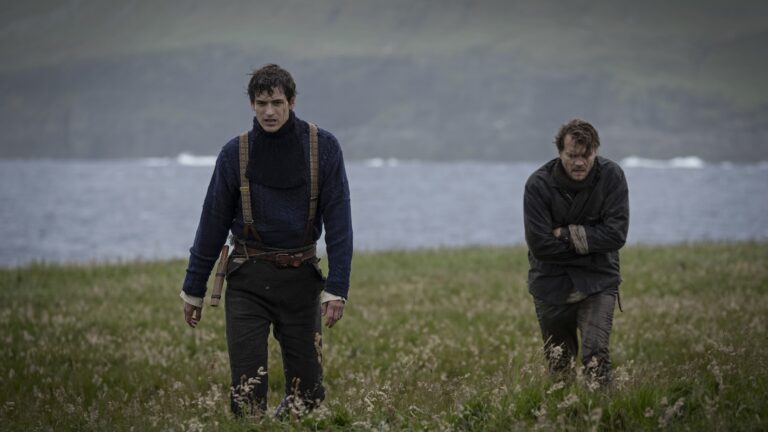
The first thing that grabbed me was how absolutely beautiful the movie looks. Set in the Faroe Islands in 1862, it uses the rocky landscapes, cold beaches and constantly present sea so effectively that the environment starts to feel like another character. I admittedly know absolutely nothing about what life on the Faroe Islands looked like in 1862, but if you told me this was a terrible representation of it, I would call you a liar and require proof. Everything from the locations and production design to the costumes and performances feels like it belongs there.
Because the movie establishes its world so convincingly, I never had to work very hard to get invested in the people living in it. Egor Venned plays Baldur, a quiet fisherman who has spent his entire life on the islands and has never even seen a tree. When Helge arrives, Baldur's curiosity about this stranger and the world outside his home is immediately believable. I was surprised to learn afterward that this is Venned's acting debut because nothing about the performance feels like someone's first time carrying a movie. Venned, who was born in the Faroe Islands, came from modeling before landing his first acting role here.
Pilou Asbæk's Helge is almost the opposite. He's traveled, confident and charismatic, but Asbæk never makes that charisma feel too big for the movie around him. I'm mostly familiar with him as Euron Greyjoy from Game of Thrones, a series I've watched all the way through more than once, so I'm used to seeing him use that charisma while playing a villain. Seeing him bring some of those same qualities to a character who isn't villainous was a nice surprise, and he walks that line between confidence and restraint really well.
Sofía Nolsøe's Ásla may have surprised me even more. Baldur and Helge obviously have the relationship at the center of the movie, but Ásla ended up being far more complicated than I expected. There were several times when I questioned her motivations or wondered what she was going to do, yet I never felt like her decisions came from a malicious place. She loves her son, and even when that love leads her somewhere painful, the movie allows her to remain human instead of turning her into another obstacle the main characters have to defeat.
That extends to almost everyone in the village, and I think it's one of the smartest things the movie does. Horror has plenty of stories where religion becomes an oppressive force and the religious characters become villains we're supposed to hate. Mrs. Carmody in The Mist is probably one of the best examples; when she finally gets what's coming to her, the audience practically wants to stand up and cheer, but Rest for the Wicked doesn't give you that easy outlet.
These people seem to genuinely love and care about one another, but they also live diligently according to their faith and believe there are rules they have to follow. Even when the village gathers to discuss increasingly disturbing events and begins condemning actions and people, I never felt like they were reveling in it. At times, it almost feels like what they believe they have to do pains them too. That makes everything happening considerably more complicated and, in its own way, more heartbreaking.
The supernatural side of the movie is where all of this comes together, and I don't want to explain exactly what that means because discovering it was part of the fun. Horror fans will recognize some familiar ideas, but they're taken in a direction that felt fresh to me. More importantly, the supernatural events aren't separate from the relationship between Baldur and Helge. The village is reacting to both at the same time, and the connection between those reactions becomes increasingly clear without the movie constantly stopping to explain what everything represents. That's something No Rest for the Wicked gets very right. It remembers that it needs to be an entertaining movie first.
There are absolutely ideas here about sexuality, faith, isolation and what happens when something challenges the rules a society has built around itself. The movie is based on Karl Heinrich Ulrichs' 1884 short story Manor, which Kalle describes as one of the earliest unapologetic stories about gay love. Kalle also connects the story to his own experiences growing up gay and feeling isolated, and talks about queer love and horror sharing ideas of fear, rejection and the desire to suppress something that ultimately cannot be controlled. You can see those ideas in the movie, but I never felt like it was preaching at me or telling me what I was supposed to think. It lets its characters, relationships and horror tell that story while still remembering that I'm sitting there because I want to watch a good movie.
There are inevitably going to be comparisons to Leviticus, especially with the two films arriving so close together and touching on some similar themes, but they're very different experiences. What surprised me most about No Rest for the Wicked is that, despite everything these characters go through, I never found it oppressively bleak. There are heartbreaking moments and characters I genuinely felt for, but the movie doesn't leave you carrying all of that weight afterward. Maybe it's the humanity given to everyone involved, or maybe it's because so much of the movie takes place against these huge, beautiful outdoor landscapes instead of trapping you somewhere dark and miserable. Whatever the reason, it manages to deal with some very heavy ideas without becoming a heavy movie to watch.
That's probably what impressed me most. No Rest for the Wicked looks incredible, completely transported me to a place and time I knew nothing about, gave me characters I cared about, and then layered an interesting piece of supernatural horror on top of all of it. The performances are excellent across the board, the setting is unforgettable, and the themes are there for you to engage with without getting in the way of the movie itself. The trailer didn't prepare me for how much I was going to like this one.