Abandoned (2026) Interview: Joby Stephens and Cast Reveal the Hidden Scares
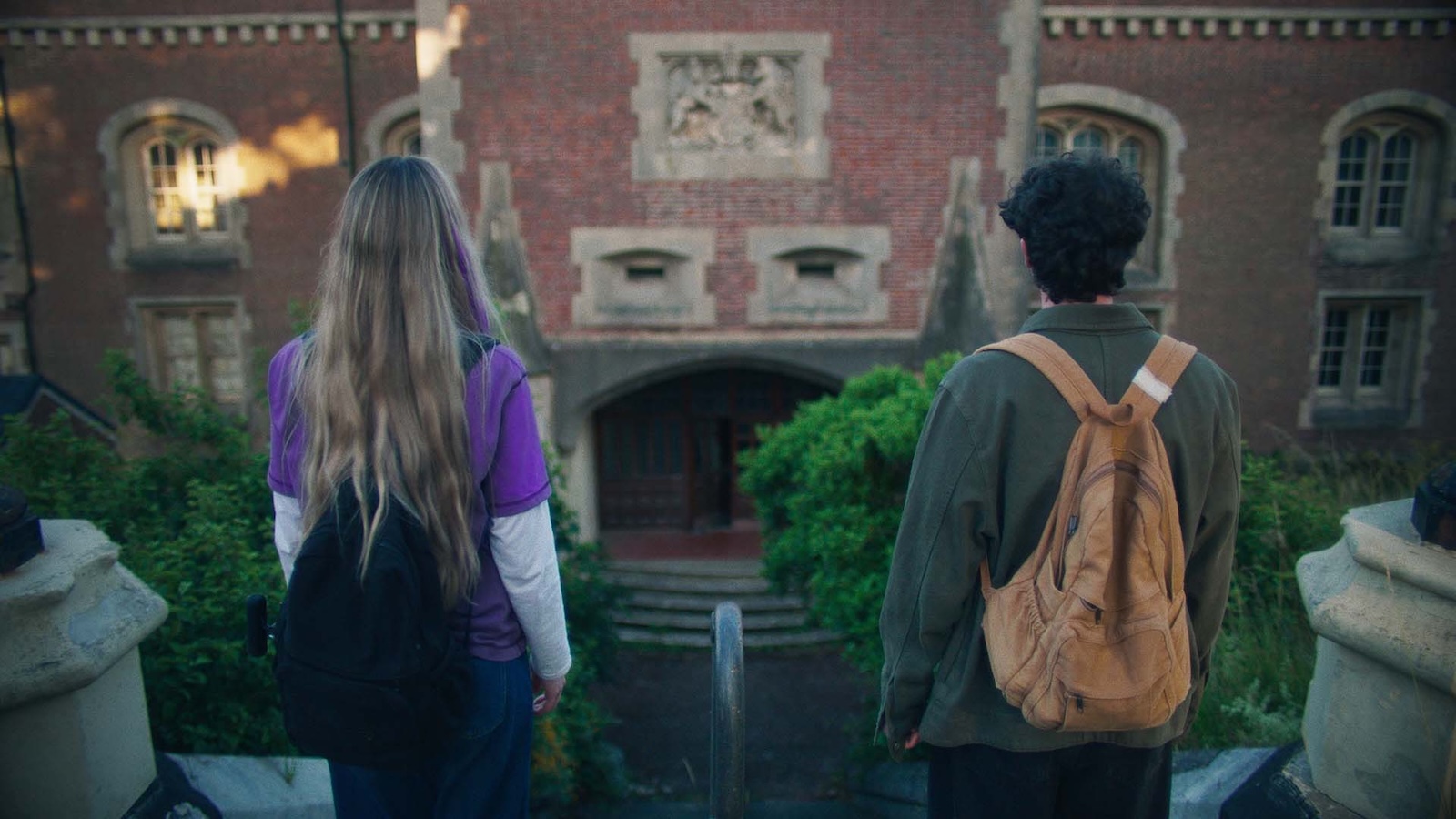
The biggest surprises in Abandoned (2026) weren’t necessarily reserved for the audience. During our Abandoned interview at Screamfest 2026, director Joby Stephens and stars Grace Gallagher and Cameron Wight explain how the found footage horror movie kept its own actors guessing.
Stephens reveals that the production withheld details from the cast, including things happening just outside an actor’s view. Grace and Cameron also describe rehearsing without the finished set dressing, going through the building blindfolded and discovering scares during unusually long takes.
Abandoned interview: How the cast filmed secret scares
The actors received differently redacted scripts, so neither knew everything the other did. The team rehearsed camera movements and blocking carefully while preserving surprises for filming. Their accounts offer a different perspective on what it takes to make a found footage horror movie feel spontaneous.
How they made the long takes work
The conversation also gets into the hidden crew, monitoring systems and custom camera rigs needed to shoot extended takes in an old building. The cast describes the physical preparation, the unusually short shoot and how they got to know each other well enough to make their on-screen relationship feel natural.
We also shared our Abandoned (2026) review. Below is the filmed interview, followed by our full conversation with Stephens, Gallagher and Wight, lightly edited for readability.
Watch the Abandoned director and cast interview
Full interview Q&A
The Fear Review: to kind of kick things off. one of the things that we really enjoyed about the movie, was how the found footage felt really natural. It didn’t feel like someone was conveniently putting a camera down to get the particular shot they wanted. Joby, what made you want to approach the movie from a found footage perspective instead of just a more traditional horror film?
Joby Stephens: I think I mentioned to you before, when we briefly met previously, the love and affection that I have towards old J horror and films that are immersive and create atmosphere, and I think a genre which hasn’t been looked at in a unique or different way would be found footage, that subgenre of horror. So to create something which was immersive, atmosphere. and I don’t think there’s anything better than sometimes looking through the eyes of the holder of the camera. So, found footage has a unique way of sucking people in, of creating an experience, but what if you could do that in one takes? What if you could do that and make it as real as possible? And that, comes down to the script, the design of the script and also comes down to the performances by Grace and Cameron. So, the all these things need to work for what you just asked to actually come out. So I’m really pleased you got that from the film. Like, that’s a that’s an awesome note.
The Fear Review: you filmed this in a very interesting way, where you withheld some of the scares from Grace and Cameron, and I believe YOU even kind of changed some of the things in the building while you were filming. So for you, how did you decide what they needed to know versus what you wanted them to experience for real? And for Grace and Cameron? How much did you actually know going into the scenes?
Joby: so yeah, A is finding the building and B is working on the characters in the script away from the building. So Grace and Cameron is Jess and Adam. They needed to have believable characters no matter where they went, no matter who they were with, no matter what they were doing, they needed to just become real.
And these two spend a lot of time just outside of that building, going into testing, the concept of holding a camera, we have test footage of them, different buildings, testing their characters, and basically role-playing as much as possible to just feel who Jess and Adam are and then adapting the script into the building, or the characters into the building. What’s believable as to what they would do, what would make sense, what’s the pathway, that would actually be real, because again, these were one takes and I didn’t want it to come across in any way staged. I wanted it to feel like you were with them in this journey that was completely in sequence. It’s fascinating because sometimes you tell people after they’ve seen the film. Yeah, you join them from the moment they went into those doors to the moment they came out and I think that’s worked really well.
You didn’t ask this, but yeah, the building was an empty shell. So we designed each room or each place they went into around sort of what part of the journey they were with. But I’ll let these guys answer, the next part of that question.
Cameron Wight: a bit on that. I mean, it was sort of like framed to us in the way of like a video game in the sense that it was being unlocked. Each rooms are being unlocked. so, we, we had the script and, but although obviously redacted parts within that script. So, we would enter a room, but as Joby was saying, it was a blank canvas when we were rehearsing. So there was nothing in there and only when we were actually there on the shoot day. And this was when, it would be nighttime rather than the day when we were actually rehearsing in, would there be a set dress, and then it would be sort of like, a moment or a beat that would be taken out and we’d have a general idea of like, camera movement and where we needed to be pointing the thing to capture what was going to happen, but for the actual scare or, the, the bit that was actually redacted, it was completely sort of like an organic reaction to that because we had no idea what was going on. on
Grace Gallagher: Yeah, I mean, adding on to that, it was an in the moment. Yeah, reaction to, we knew the redacted parts and it was, yeah, like Sophie’s performance, Ashley’s performance. We knew something was going to happen, but we hadn’t seen it until the actual time that it happened. Oh, actually, that’s cool. But yeah, and we approached it kind of like a play, but in rehearsing like the blocks, which allowed us to get really not used to the building, but used to the structure of where we were going, the route would take. So it allowed that kind of immersive element so we could just react.
Joby: I mean, and on that note, the scares and what was sometimes behind them, what they didn’t see because, so for example, there is a scene where, something happens behind Grace’s character, and she has no idea that this thing happens behind her during filming. And in fact, we didn’t even tell her after filming. I took that risk that, with the note as the director being like, Grace, as Jess, you’re looking this way then you’re looking this way, this is what you say in this moment without telling her that, and, you’ve seen the film, not going to ruin it. in the moment. It’s a nice it’s a nice bit. She doesn’t know that happens behind her in any way. So it really did feel and it could have been. And this would have been a fun in the one take. It could have been that she turned around at that and then we might have a different movie in that moment. But you just aren’t fully aware. So the script was written without any redactions and then obviously what going with the flow of how I wanted to sort of dive into the intensity. And Joe and I, Joe, the co-writer, we spent a lot of time working on those beats and those patterns. And then it was like, well, okay, what do we not want them to know? And they did have, the scripts were redacted in different ways. So Cameron had a different script to Grace, just so they overlap slightly in terms of what they knew, but they never shared that information together, which again was, full respect to them for not doing that. They didn’t ruin the moments for each other.
Cameron: Suppose there were just bits and bobs here and there where, it was not even just inside the shoot location. It would be, by the makeup trailers, every single time that we would walk past, we would have to cover our eyes just to make sure that as we were walking, nothing could be spoilt for us if someone was in costume and they walked out by and just to get some fresh air or something. So we were very vigilant to make sure that we weren’t going to spoil the surprise ahead of time and wanted to make sure that for us it would be as organic as it would be. I mean, we went through the building blindfolded at one point to make sure that we weren’t seeing the setup of how they set dressed the whole thing prior to us filming just to give us that sort of authenticity to it.
Joby: And the reason they were blindfolded is I had, there is one part of the script where it wouldn’t, just one, one room, and I’ll leave you to think, what that might be, where I had to reveal the room to them. Otherwise they wouldn’t have got the notes what we were doing around them with the doors. So it had to be something which they saw in person and it had to be something where they could react and know because otherwise the camera work, it wouldn’t have been in the place it was. So there was one room where, and there’s a great bit of behind the scenes where we were literally guiding them blindfolded through the entire place. So then, and they can’t see, to then go into a room where we showed them, just this area. This is where this key prop is, this is where this is and again, I think it added more to their tension before they did that long take. I don’t know, guys, it was just like, what? We’re going to get here and this is what this looks like. So that was quite cool.
The Fear Review: Wow, this is really interesting to try to think about like the experience. So for Grace and Cameron, like how nerve-wracking was this for you?
Grace: I mean, I feel like there was that nervous anxiety, but especially the first moment we go into the building, like the top of the stairs. It really, I remember I saw each other like, “Oh God, this is actually it. We’re actually going to go into the building”, there’s that build up. And like you said, it was the first time we’d been there at that time, at nighttime, anytime prior we’d rehearsed. The few times we did, it was in the daytime. And again, wasn’t set dressed. So there was that, “Oh my God, it is just us”, just the two of us in the building and unlike regular film you see the camera person and you see the, everyone involved, whereas Bless and, like, the sound guys were there, like running around the building, hiding behind doors. So they were so hidden. They did such an incredible job of at making sure we didn’t see them. No piece of pattern, nothing, although there was little moments where we heard creeks and it did feel real like, “what the fuck is that?” Not sure if I’m rambling here, but yeah, incredible, like unique experience in itself.
Cameron: Yeah. I think also it’s sort of nervous or nerve-racking in the sense where, we’re doing these long takes and, we’ve been rehearsing them for a long time. we know our lines, we know this sort of beats we’ve got a hit, but, nothing quite prepares you for the sort of immersion of being put into a building and being there like, right, “see you in about 30, 40 minutes”, that kind of thing, and “good luck” and then have to do that whole block, that first chunk, because that’s how long that 1st take was 30 minutes. It was a wild experience to have to do that but I think once you’re in there it’s just sort of flowing and just making sure that you’re doing the job properly. Yeah, I felt very quick, very, very quick.
The Fear Review: Yeah, yeah. Were there any parts that you got scared? Not your characters, but like being in that building, being alone? Were there parts that you genuinely got scared while you were filming it, being in this creepy building?
Cameron: Yeah, I think, well, there’s there’s a lot of times when, there’s bits where in the script, we sort of go into different rooms, and as we’re exploring, and I think the safety blanket of having a person next to you in a space like that is, you can’t really describe it because as soon as they walk away, It’s very much like we’re in the scene now, we’re acting, but, deep down it’s sort of there, like, please no one come out of the shadows. That was just, is this like a whole prank situation where there’s all things with the lead up for someone to come and like jump scare us because that would be the best thing, but luckily nothing happened. We actually made a very nice film. So, yeah.
The Fear Review: so Joby, for you, we’re talking about these taKes taking close to 40 minutes, and you built a whole network throughout the building to monitor everything. How did that actually work? Were you just watching them explore and triggering things as they went?
Joby: It was all cabled and wired. If you looked at the exterior rear of the building, which we never see. All of the windows had what, I mean, it was like 1200 feet of Cat5, Cat6 cables just coming out of it in every window, everywhere you can imagine, which looked ridiculous in itself and then it would feed into the building and in the lower level basement and the ground floor and the top and then into the tunnels as well. And so we built an AP, like a standard Wi-Fi connection at home with access points if you wanted to strength the network. where you create meshes and circles that overlap and that’s how you do it on a floor plan. So I’ve got these huge floor plans of this building at home when I was developing the script, Joe, and we were like, okay, this is this is the resident evil floor plan. This is the video game floor plan. This is the script floor plan when they’re in the building. This is how we look at it. This is our one, two, three, the ground levels, et cetera. Right. So then I’m just going to draw circles on it and see where I can overlap network points. And it even came down to at points. There are a couple of rooms that these guys couldn’t go into because the connection would just drop. And we did so many tests in this place. I mean, 2 or 3 full days of tests where it could drop out and we would never know why. This was with a networking company and you have to sometimes realize that the building you’re in is so old and the concrete walls are so thick that even the latest, access point network technology just can’t penetrate through. We did 5G tests and 2.4, and without going too geeky, we basically just drew circles on the building and worked out where the strength points would be, and then, cool we’ve got the network. And then it was working with the cameras, working with software and app technology to monitor and track them as a full frame, Sony camera, went between, mesh networks, and basically was able to either rejoin a connection or overlap a connection. I think, for example, in the longest take, in that 30 minute take, we might have lost the connection for a couple of times for a few seconds. But in those very brief moments before the camera reconnected, we were able to fully hear them. And at those precise times, the CCTV cameras which come into play in the film were also our safety points to watch the actors and see what they were up to queue anything around them. So we could queue movement of crew, and we could queue movements of performers around the cameras as our belt and braces. So it was a fascinating process. Yeah, and it was unique. The Sony camera that we used, we bypassed the stop record So no matter what happened in terms of losing connection, it just always recorded. So in the in the sort of the video village studio that we set up, we could control, all of the camera settings, and we could also do stop record. In fact, on top of what was Cameron’s camera and then Grace camera, they couldn’t actually press the record button, it was disabled. So we printed 3D parts onto the camera, so everything was locked in and only we were controlling it.
The Fear Review: I didn’t even think about that. Like, if you hadn’t done that, like, inacting, not even realizing it, maybe turning off the camera and like having to start over that…
Joby: Because it’s a trigger finger. So it’s very easy, but you could press it accidentally and imagine if that had happened and it’s just a horrible place to be. So we just printed a fake top to the camera. And these custom rigs that we 3D printed were really cool. Like genuinely cool. They were like the ultimate 4K cinematic YouTube camera. It was it was, pretty crazy.
The Fear Review: But those long takes for you, Grace and Cameron, you can’t really stop, reset, and like do another line and you’re carrying the scene for like a really long time and you’re physically running through the building. How exhausting was that? Did it kind of help you stay in character or were there times you were just I’m done? I need somebody to yell, cut.
Grace: I feel I feel like naturally it did feel exhausting at the end after you’ve done it, like the adrenaline, when you’re in it. Like I said, it felt really quick for us. I mean, we’re getting to the entertainment, we’ve done a take and then there’s a little “yeah, crazy”. So as much as it was exhausting, it did really add, I think, to that, especially with the running down the building.
Cameron: Yeah, I think we had a lot of time to, I mean, Joby had us on like forearm training. So we can hold the cameras properly and make sure that we were, able to go through those long takes and, because there is, I mean, you try to hold one of those cameras with the with the grips that we’re doing and like having to do this, it takes a lot out of you quite quickly. So, but I think when you’re in it, you just sort of are like, “well, okay, let’s go”, and I think there’s moments where you can just sort of put the camera down in a way where it’s like, “okay, now I can just chill and, use this moment to regain a bit of energy”. But yeah, tiring, but very fun to do.
The Fear Review: And one thing that we really liked was how believable y’all’s relationship felt. even before anything goes wrong, the banter felt like Two people that had really known each other for a long time, how much of that was scripted and was there any kind of like improvising that went along with that?
Grace: Yeah, I mean, especially the opening sequence, that was the little frame. Am I giving spoilers? The opening part, that is, predominantly, I say, improvise when we’re exploring places, although obviously everything has a scripted part of it, like we’re going to go into a specific place, this might happen, like, yeah, a lot of improvs.
Cameron: Yeah, I think I think that was something that I think helps for the audience to see like, the relationship being built up. But I think just for us getting to know each other, that kind of thing we had, we did a lot of trips to see Joby, and with the rest of the production team and we would hang out with them a lot during the rehearsal process and we would go and we’d play like video games together and we would like watch found footage films and we’d just get to know each other. We were coming down from London down to where we were rehearsing on a train for a while. So it was just kind of getting to know each other as it was as it was going on.
Grace: And we failed to get into actual abandoned buildings.
Cameron: Yes, yeah. We did try. Yes. Just going around, trying to do, we can do it as a Grace and Cameron, but we’re not successful. So.
Joby: On that on that note, the guys, they play Yeah, we got we got them to play. video games together and as well as go, yeah, just going character and explore places and, go on friendship, friendship dates and they met up and lost to them because they went into it themselves outside of us sort of asking for it because they took these roles incredibly, as professionally serious as possible. Again, this is an indie film and sometimes that sort of attention to detail might get slipped, and I didn’t want that. They needed to be believable but I do remember one part where just to help with that found footage, energy, and some of the references that I use for my torches, and how myself and Nathan, the DOP lit inside the building in the dark. Video games are a great reference for that as well as, found footage films but Phasmophobia was a good game for these two to play, but they ended up just laughing at each other when their characters died. And I thought, “hang on, what’s happened, this isn’t good research anymore”. This is like what’s going to happen when we… So yeah, it’s good fun.
The Fear Review: And one last question. Now that you’ve seen the finished film and audiences are getting to experience it, is there a scene where you think, “I can’t believe we actually pulled that off”? Or is there something that feels completely different on screen from what you experienced?
Joby: As in, I know this is the one that I thought, well, once we’ve got this, once we’ve got this in the bag, then the rest. And it did build. So, like, William, we shot completely sequentially, as you can imagine, like, from A to Z without these guys knowing a few of the letters. And each time we did a block, there were four blocks, so four takes, each time we did one, it was, it dulled the intensity for the actors, but it dulled the intensity of what was happening. So I was like I was giving it more and more. I didn’t want to be unbelievable if, for example, if these two, as the characters had experienced something that was ridiculous within 5 minutes. I don’t think it’s believable that they would have stayed there. So we had to like surf this line of like, why are you staying in the building? What is that? And, I hope we treaded that quite carefully to give them justification before we sealed them in. But in the third block, as we called it, there’s a scene in which there are things that appear, which meant that the sort of the live theatrical timing of what was going on, and again, I’m really trying to carefully not to reveal, like, it would ruin things, but the timing was down to like split seconds of phenomenal camera movement, and it all happened without a cut. But if you watch it, and I know if I watched it, I would go, yeah, there must be a cut there. That has to be for what just happened. But there actually isn’t. It’s genuinely one take where things appear and disappear and someone might move to another place. And I just think that when that happened, I was like, “oh, we’ve got it.” Like we got it in one, that’s real, and because the worst thing I think for that, that part would be for, for, again, without ruining things. like to cut and then reset, to jump back into that moment, into that feeling of that breathing and dread and that tension. I don’t think that’s fair if you can do it in another way when you’re trying to immerse. Of course, like actors will say, yeah, that’s what my job is. That’s what I’ll do. I still think it’s more believable if you do it in, do it in the go for it. create the atmosphere around them. sorry. So I just gave an answer, but I didn’t, I hope I didn’t say anything that was ridiculous. It’s really difficult to do, actually. Guys, your turn.
Grace: I mean, I feel like just the amount of time we did it in is, yeah, eight days. Like, to me, that just feels like I’ve done short films in that amount of time, like 8 days for the whole thing for all of us to have done that. I think for me is what it. Yeah. Not that is maybe something you see when you watch it, but like that feels unbelievable.
The Fear Review: That’s insane. I mean, you hear about, big movies like, oh, we filmed for 3 months. And then you did it in 8 days.
Cameron: I think, for me, it’s mainly being in the audience now and you’re sat there and obviously we’ve we’ve done the film. We know what happens. We’ve experienced it. But I think when you’re in the theaters and you’re in the cinema and you’re watching it, depending on where you are in the world. I mean, we’ve seen it in the UK now in the US. So just seeing the differences and the beats that we were going for, the slightly funnier bits towards the beginning and then the scary bits towards the end, like having those moments and then hearing an actual physical response from an audience is nothing really quite like it. And I think it’s really nice to see which audiences pick up on different things and which audiences are experiencing, the scares more intensely or the comedy more intensely. So I feel like that’s been a really, really nice thing to experience with everyone. as a part of the team because, it was all us together, just in eight days, in a prison, just doing some crazy stuff.
The Fear Review: I think the best compliment that I can give the film is always judge .. My co-host is my wife and she’s not what I wouldn’t say a horror fan and I’m a horror fan, is I judge how scary it is by how if she kicks her feet when she gets scared. And like three or four times during it.. like full body, like kicking her feet, like scared. So, good job. Good job. hat’s the best compliment I can give.
Joby: That’s fantastic.
The Fear Review: Well, I definitely appreciate y’all’s time this morning. Congrats on the film and thank you so much for taking the time to chat with me today.
Grace: Thanks, you too!
Joby: William, thank you so much. Glad you enjoyed it and glad your wife enjoyed it and kicked her feet a little bit as well. That’s amazing to hear. amazing
Cameron: Thank you very much.
For our thoughts on the finished film, read William and Amy’s Abandoned (2026) review.