Natalie Erika James on Saccharine, Relic and Apartment 7A
Natalie Erika James talks Saccharine, Relic, Apartment 7A, sensory horror, sound design, physical transformation and her Apple TV series Ascension.

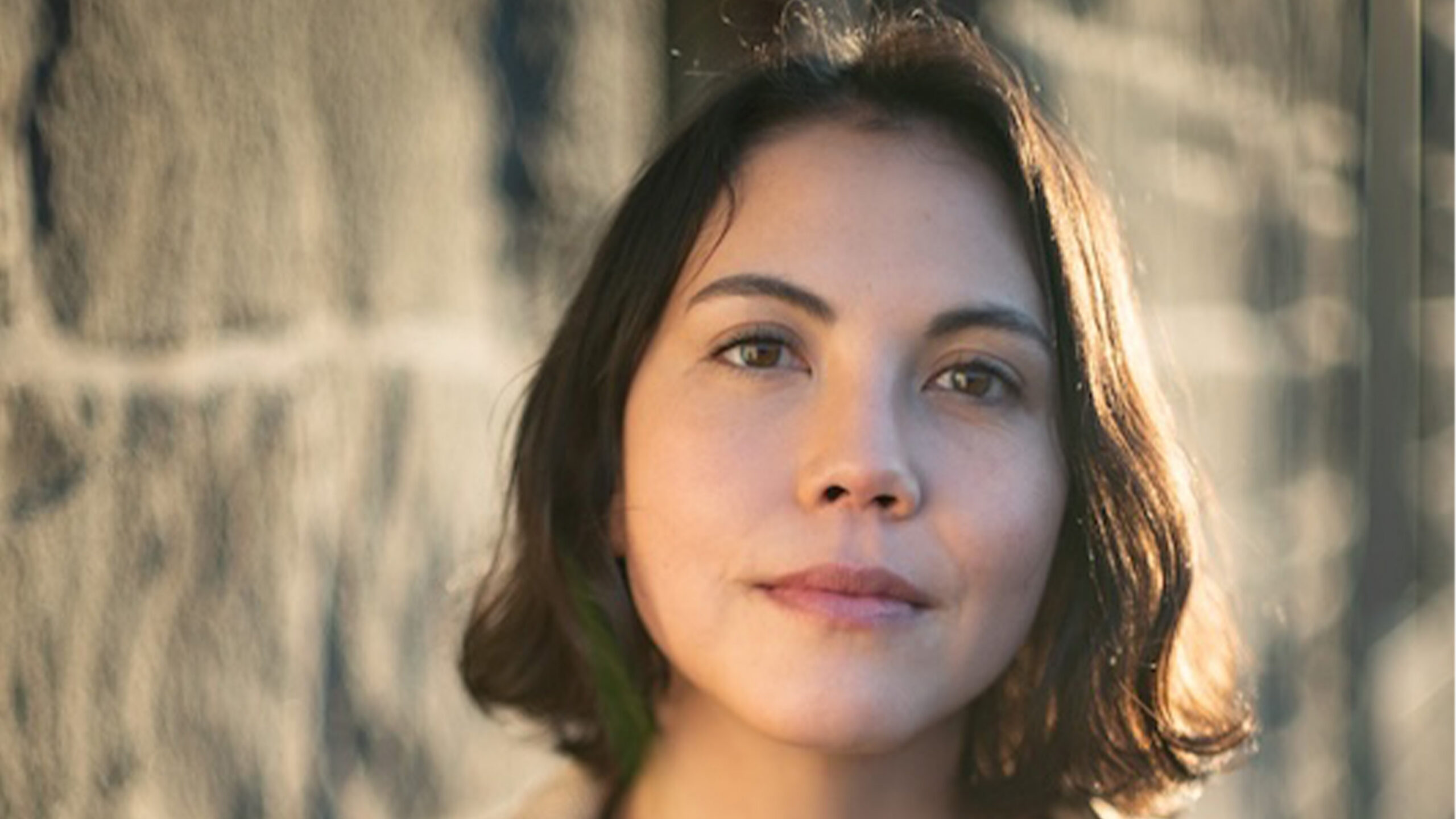
Filmmaker Natalie Erika James joined The Fear Review to talk about Saccharine, the intensely sensory body-horror film that followed her work on Relic and Apartment 7A.
Our conversation ranges across all three films, from the deeply personal ideas underneath Relic to the challenge of working inside the world of Rosemary’s Baby. James also breaks down how Saccharine used food, sound, prosthetics and physical transformation to put viewers inside Hannah’s experience.
We also talked about her move into television with Ascension at Apple TV and the horror movies that first made her fall in love with the genre.
Watch Our Natalie Erika James Interview
If you would rather read it, our full conversation is below, lightly edited for clarity.
The Fear Review Interviews Natalie Erika James
The Fear Review: We watched Relic when it first came out in 2020 and again recently after losing grandparents who had Alzheimer’s and dementia. The second viewing landed very differently. Did you intentionally write the film so it could play differently depending on a viewer’s personal experiences?
Natalie Erika James: I feel like you often hope that a film works on a number of levels, and that there’s a more surface story that hopefully can reach a wider audience. Then maybe if people have particular insights into a certain experience, they can read into deeper levels. So I’m at once sorry to hear that and also glad to hear it resonated on a different level as well.
You can read or watch William and Amy’s full Relic review.
The Fear Review: With Apartment 7A, you went from a very personal debut feature to a prequel to a revered horror classic. How was that experience different, and did it change your approach?
Natalie Erika James: There’s so much difference in playing in someone else’s sandbox and taking on massive IP. There are definitely joys to it as well, being able to write scenes with such wonderful characters and explore that world, and also drawing on a certain time and the visuals of the set and pulling those into a more modern retelling.
What drew me to the project was the idea of not making a remake. It was a different story, and maybe there was something in Terry’s story that was worth exploring as well. Process-wise, it’s always different making a studio film. There’s a preview process that comes along in post that is very different to indie filmmaking, mostly because in indie filmmaking you just run out of money. There aren’t as many reshoots and all of that. There’s certainly more freedom in indie worlds, but you don’t have as many toys to play with.
The Fear Review: Terry’s ending was already established by Rosemary’s Baby. Did knowing where her story had to end feel freeing or more challenging?
Natalie Erika James: In a lot of ways, when I write, the ending comes pretty early in the process because that dictates what the film is really saying. So it’s challenging when a character’s fate is already decided, especially when it’s a fate that’s so dependent on their own decision and the endpoint of their journey. In a way, you’re reverse engineering: what are the circumstances that get her to that point?
Sometimes having those restrictions can be creatively fulfilling because you have to be very decisive in the creative choices that you make. If it’s all open-ended, there are a lot of things you can do to get there and those choices can become a bit diluted. The end scene with the dance and that sense of performance in front of the coven was there from the start and something we were constantly working toward. The fact that it was baked into the original Rosemary’s Baby also meant no one could come in and go, “Could she just live?”
Read our full Apartment 7A review.
The Fear Review: Saccharine creates a lot of sensory discomfort, especially with the food imagery and how close the camera gets. Was that reaction intentional, and technically, how did you film those eating scenes?
Natalie Erika James: We really wanted to have a sense of the texture and make the film feel very tactile, and to thrust the audience into the subjective experience of having an eating disorder. There’s this allure to the food, but then there’s also this grotesqueness to the food. That pull and repulsion is very true to what it can be like in the grips of a binge, where it’s too much but it’s never enough and there’s this compulsive drive to eat.
In terms of how we shot it, we used a lot of probe lenses, which allow you to get really close to a subject with wider lenses. With the breadth of food Midori has to eat over the course of the film, we really tackled it like a stunt. There was a lot of prep for the art department and our food stylists. We had spreadsheets for what she was eating and, if it was candy bars, whether we could find low-calorie protein versions. She usually would do one take where she actually ate whatever it was, and then for the rest we had a bunch of spit buckets nearby.
The Slurpee scene in the convenience store was a one-take thing and she’s drinking it the whole time. She said she got a brain freeze in her stomach — a stomach freeze. The crew burst into spontaneous applause when we yelled cut.
The Fear Review: You’ve used sound to create discomfort across your films, from the house in Relic to the cracking ankles in Apartment 7A and the sounds in Saccharine. Is that something you think about while writing, or does it evolve later?
Natalie Erika James: It always goes hand in hand, particularly when you’re writing something in the horror genre. You’re always thinking about using all of the senses to create whatever it is — fear, revulsion, whatever you want to create. It’s so much a part of horror, particularly where there’s a sense of menace or it’s about what’s in this space with you. You’re so attuned to the visuals, but sound offers so much as a tool.
The Fear Review: Can you talk about how you designed Hannah’s physical transformation? It feels very organic from where she starts to where she ultimately ends up.
Natalie Erika James: We definitely wanted it to have a very natural progression and for Hannah at the start of the film to look as much like Midori as possible. We designed the progression over seven stages. It was a combination of prosthetics, a bodysuit that got smaller, and hairpieces that changed as she started losing weight, with her hair becoming more matted and lifeless. Midori’s physicality plays a lot into it too.
It was one of those elements that was make or break, because it can go so poorly. We’ve all seen films where actors are in bodysuits that make them look like the punchline of a joke. We were trying to achieve the opposite of that. There was so much planning, including 3D modeling and decisions about how much weight. In a way, she looks healthiest at the start, and it’s really more about her internal struggle than anything external. If anything, losing the weight clearly makes her unwell. That was really important to preserve.
The Fear Review: Your films create such physical, sensory experiences. Once everything comes together in the finished film, have you ever had a moment where you’ve genuinely grossed yourself out or scared yourself?
Natalie Erika James: You’re so present in the making of it that there are no real surprises necessarily. Sometimes there are discoveries and things hit harder once they’re edited, for sure. But it’s more often that something isn’t as intense as you want it to be rather than, “Oh, this is too much.”
There are definitely moments of visceral gore, but I wouldn’t say they were placed there to gross out the audience. That’s not really the intention. It’s more a texture to an engagement with the body on screen. With the juxtaposition of flesh and eating, even from the first five seconds of the film, we’re slowly building that consumptive desire and trying to make the ending feel inevitable but also surprising.
Read William and Amy’s Saccharine review for their full take on the film.
The Fear Review: What’s next for you creatively?
Natalie Erika James: I’m working on my first series, so my first TV kind of thing, which is very exciting. We’ve got an Apple show called Ascension that my co-writer Christian and I are writing at the moment. We did Relic together.
It follows a documentary maker who’s investigating survivors of a doomsday cult. Most of them were slaughtered in a massacre in the ’70s, but these are the survivors of that time and they claim supernatural things were happening. The more she digs into things, the more that starts to permeate her life. It’s told in a collage-like way with a bit of found footage and across different timelines. I’m very excited about that one.
The Fear Review: For our Horror Testimony, do you remember what first drew you to horror and how that relationship with the genre shaped you creatively?
Natalie Erika James: I definitely have a bunch of things that influence me, but one that’s easy to point to is going to the cinema with my friends for the first time alone when I was 11 and seeing The Others. I was totally out of my mind scared, but also thrilled at the same time. It was kind of like being on a roller coaster and just surviving that fear with your friends. There was nothing like it, so that always made an impression on me.
Then, of course, sleepovers with Asian horror and The Ring and all that good stuff came pretty soon after that.